
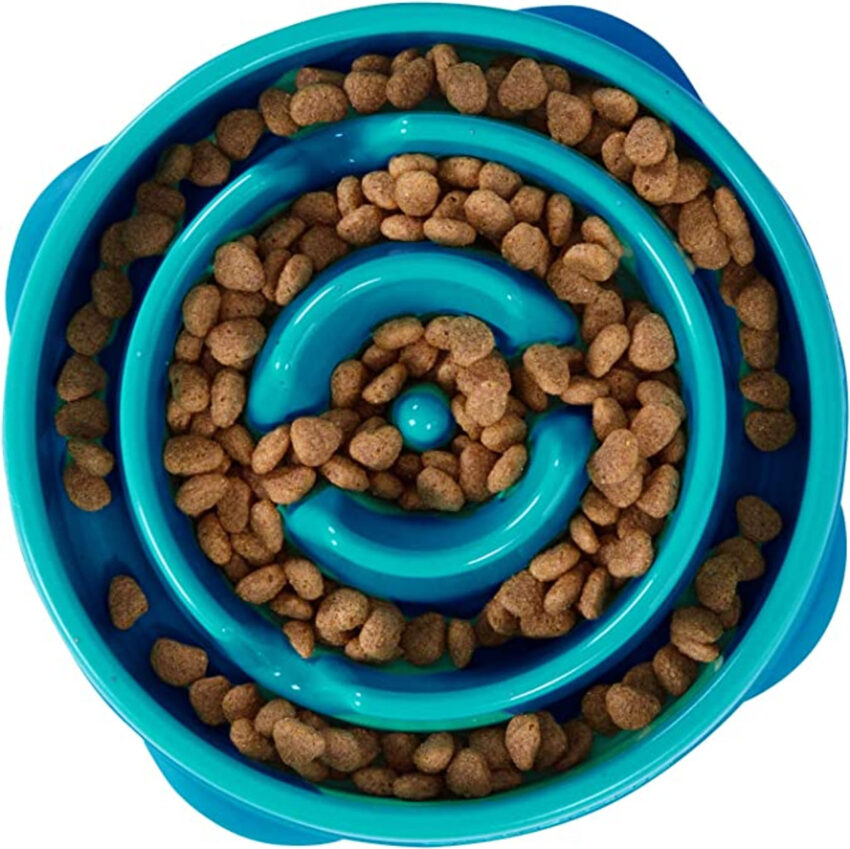
High-drive dogs don’t just eat—they engage. For many working breeds and mixes, mealtimes are another outlet for energy, problem-solving, and excitement. Which is why feeding can either add to the chaos… or help reduce it at the source.
One of the simplest tools that often gets overlooked is frozen slow feeding.
Not as a gimmick. Not as enrichment for the sake of it. But as a practical way to channel drive, slow arousal, and build calmer behaviour patterns from the inside out.
Why Mealtimes Matter More Than People Think
For a high-drive dog, food isn’t just nutrition—it’s stimulation.
If a meal is:
- Finished in under 30 seconds
- Gulped with high arousal
- Followed by pacing or frustration
…it reinforces a fast, reactive mindset.
You’re essentially rewarding speed, urgency, and intensity.
Over time, that pattern carries over into other parts of life:
- Walks become rushed and reactive
- Training becomes frantic rather than focused
- Settling becomes harder because the “switch off” never happens
What Frozen Slow Feeding Actually Does
Frozen slow feeding takes something the dog already values (food) and turns it into a structured problem-solving task.
Instead of a quick reward, the dog has to:
- Lick
- Work
- Problem-solve
- Stay engaged for longer periods
This shifts the experience from “consume and explode” to “work and regulate.”
It slows arousal at the exact moment it would normally spike.
Channeling Drive in a Productive Way
Working breeds are built to persist. They are designed to keep going, keep thinking, and keep engaging until a task is completed.
Frozen feeding gives them:
- A controlled outlet for persistence
- A structured task that doesn’t create chaos
- A way to engage without overstimulation
It’s still drive—but it’s directed drive.
Instead of creating intensity in the home, you’re redirecting it into something calm, repetitive, and self-regulating.
Why It Helps Calm the Nervous System
Licking and sustained chewing behaviours naturally promote lower arousal states in dogs.
When a dog is engaged in slow feeding:
- Breathing rate reduces
- Movement decreases
- Focus narrows
- The body shifts into a calmer state
For high-drive dogs, this isn’t just “nice enrichment”—it’s regulation training disguised as feeding.
A Simple but Powerful Daily Tool
Frozen slow feeding is most effective when used consistently, not occasionally.
It can be used:
- In the morning to set a calm tone for the day
- After exercise to prevent over-arousal
- During busy household periods
- As part of structured downtime training
It becomes a predictable cue: when this happens, we settle.
It’s Not About Food, It’s About State
The real value of frozen feeding isn’t in the bowl—it’s in the behaviour state it creates.
You’re teaching the dog:
- Slow is acceptable
- Calm engagement is rewarding
- Not everything needs to be consumed instantly
- Stillness can exist alongside stimulation
For high-drive dogs, that lesson is critical.
Because without it, everything becomes fast, reactive, and self-reinforcing.
Common Mistake: Treating It Like Entertainment Only
Frozen feeders are often used as a distraction tool—something to “keep the dog busy.”
But the real benefit comes when it’s treated as structure, not just entertainment.
If it’s random or inconsistent, it becomes novelty.
If it’s structured and predictable, it becomes regulation.
That difference matters.
Where It Fits in a Structured Routine
Frozen slow feeding works best as part of a wider system that includes:
- Structured walks
- Clear training sessions
- Defined rest periods
- Calm reinforcement at home
It’s not a replacement for training—it supports it.
Think of it as a way to reduce baseline arousal so learning and settling become easier throughout the day.
Final Thoughts
High-drive dogs don’t need more stimulation thrown at them. They need better direction for the stimulation they already have.
Frozen slow feeding is one of the simplest ways to start that process at the source.
It takes something that normally fuels excitement—food—and turns it into structure, patience, and calm engagement.
Not by removing drive.
But by shaping it.
And for many working dogs, that small change can have a surprisingly big impact on the rest of the day.