
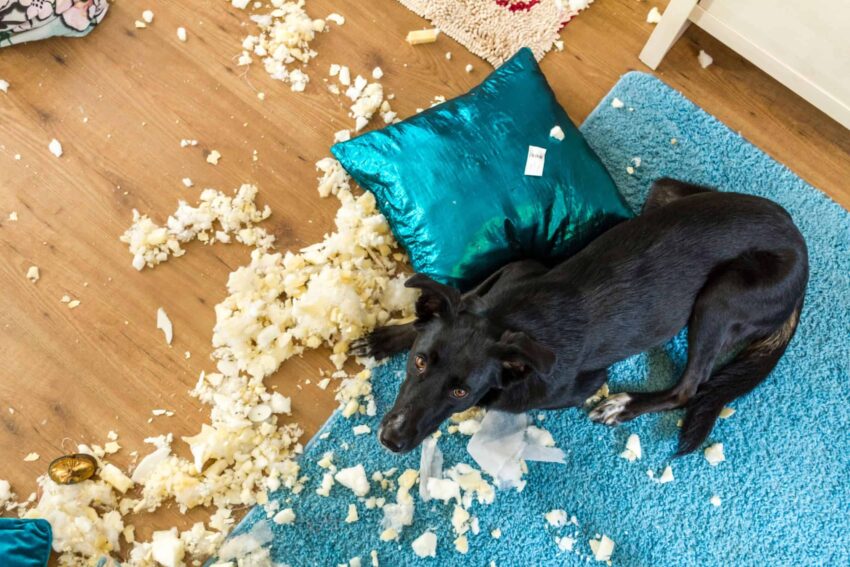
“Bad” is one of the most common labels dogs get—and one of the most misunderstood.
Pulling on the lead. Ignoring commands. Destroying the house. Barking, lunging, not settling.
It’s easy to look at these behaviors and assume the dog is stubborn, dominant, or just difficult.
But in many cases, especially with working breeds and high-drive mixes, the issue isn’t that the dog is bad.
It’s that the dog is underworked.
What Does “Drive” Actually Mean?
Drive is the internal engine that pushes a dog to act—chase, hunt, problem-solve, engage, persist.
Working breeds were selectively developed for this. Whether it’s herding livestock, tracking scent, guarding property, or performing physically demanding tasks, these dogs are built to:
- Stay focused for long periods
- Handle pressure and stimulation
- Keep going when other dogs would stop
That intensity doesn’t switch off just because they’re living in a home.
When Drive Has Nowhere to Go
When a high-drive dog lacks structure, direction, and purpose, that energy doesn’t disappear—it redirects.
This is when owners start seeing:
- Destructive behavior around the house
- Obsessive patterns (pacing, spinning, fixation)
- Reactivity on walks
- Inability to settle or switch off
- Constant demand for attention or stimulation
From the outside, it looks like disobedience.
In reality, it’s often a dog trying to do something—anything—to satisfy an unmet need.
Exercise Isn’t the Same as Fulfillment
A long walk or a run in the park can take the edge off—but it rarely fulfills a working dog.
In fact, more unstructured exercise can sometimes make things worse by:
- Increasing stamina without improving control
- Heightening arousal without teaching regulation
- Reinforcing chaotic, self-directed behavior
These dogs don’t just need to move—they need to think, engage, and work with you.
The Missing Piece: Direction
The key difference between a “difficult” dog and a balanced one is often direction.
When you give a high-drive dog:
- Clear expectations
- Consistent boundaries
- Structured outlets for their energy
- A role within daily life
…you start to see a shift.
The same dog that was:
- Pulling relentlessly
- Ignoring commands
- Reacting to everything
…begins to:
- Check in with the handler
- Show impulse control
- Settle more easily
- Work with purpose
Nothing about the dog has changed genetically—you’ve just given that drive somewhere productive to go.
Not Every Dog Needs the Same Job
Understanding your individual dog matters.
Some dogs thrive on:
- Obedience-based structure and precision
- Scent work or tracking
- Controlled social interaction
- Task-based routines within the home
The goal isn’t to exhaust them—it’s to engage them correctly.
What We See Every Day
One of the biggest misconceptions is that these dogs are inherently hard to live with.
In reality, when placed into the right environment, they often adapt quickly.
We regularly see high-drive dogs come in with a reputation for being unable to settle—only to relax within a short period of time. Not because they’ve been worn out, but because the structure around them finally makes sense.
Clear rules. Consistent handling. No grey areas.
For many dogs, that clarity is something they’ve been missing.
Reframing the Problem
Instead of asking:
“Why is my dog behaving like this?”
It’s often more useful to ask:
“Is my dog getting what it was bred for?”
That shift in perspective changes everything.
Because once you understand that the behavior is rooted in unmet drive—not defiance—you can start addressing the cause, not just the symptoms.
Final Thoughts
Most high-drive dogs aren’t trying to be difficult.
They’re trying to function in a world that often doesn’t meet their needs.
When you replace guesswork with structure, and chaos with direction, the same dog people label as “bad” becomes:
- Focused
- Responsive
- Settled
- Reliable
Not because they’ve been suppressed—but because they’ve finally been understood.
And that’s where real progress begins.